
Weighing in on Thread
Until a year ago when I was fortunate to purchase a longarm quilting machine, I did all of my own quilting on a domestic sewing machine. My practice was to match my bobbin thread to the top thread to reduce the appearance of tiny thread dots on either side of the quilt. Modern sewing machines with digital tension settings often cannot be tweaked perfectly to remove the tiny dots! Even machine manufacturers advocate matching top and bobbin threads to minimize dot appearance.
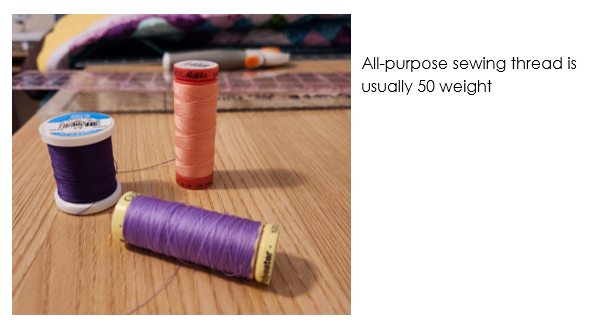
Matching top and bobbin threads meant a lot of filling bobbins every time I changed my top thread color (which was often!) but I was used to this practice and did it without question (because I knew no other option!). I used all-purpose, 50 wt thread in both the top and bottom threads.
When I was learning to use my longarm machine, the trainer pointed out that bobbins are commonly filled with 60 wt thread, a finer, lighter weight thread than 50 wt thread.
(Paradoxically, the higher the thread number, the lighter and finer the thread is!) As I tried out quilting on my longarm machine and looked at the backs of the quilts, I found the stitches were virtually invisible! The fine thread blended in so smoothly with the backing fabric, all one saw was the 3D effects of the quilting motifs with a minimum of actual stitches delineating each!
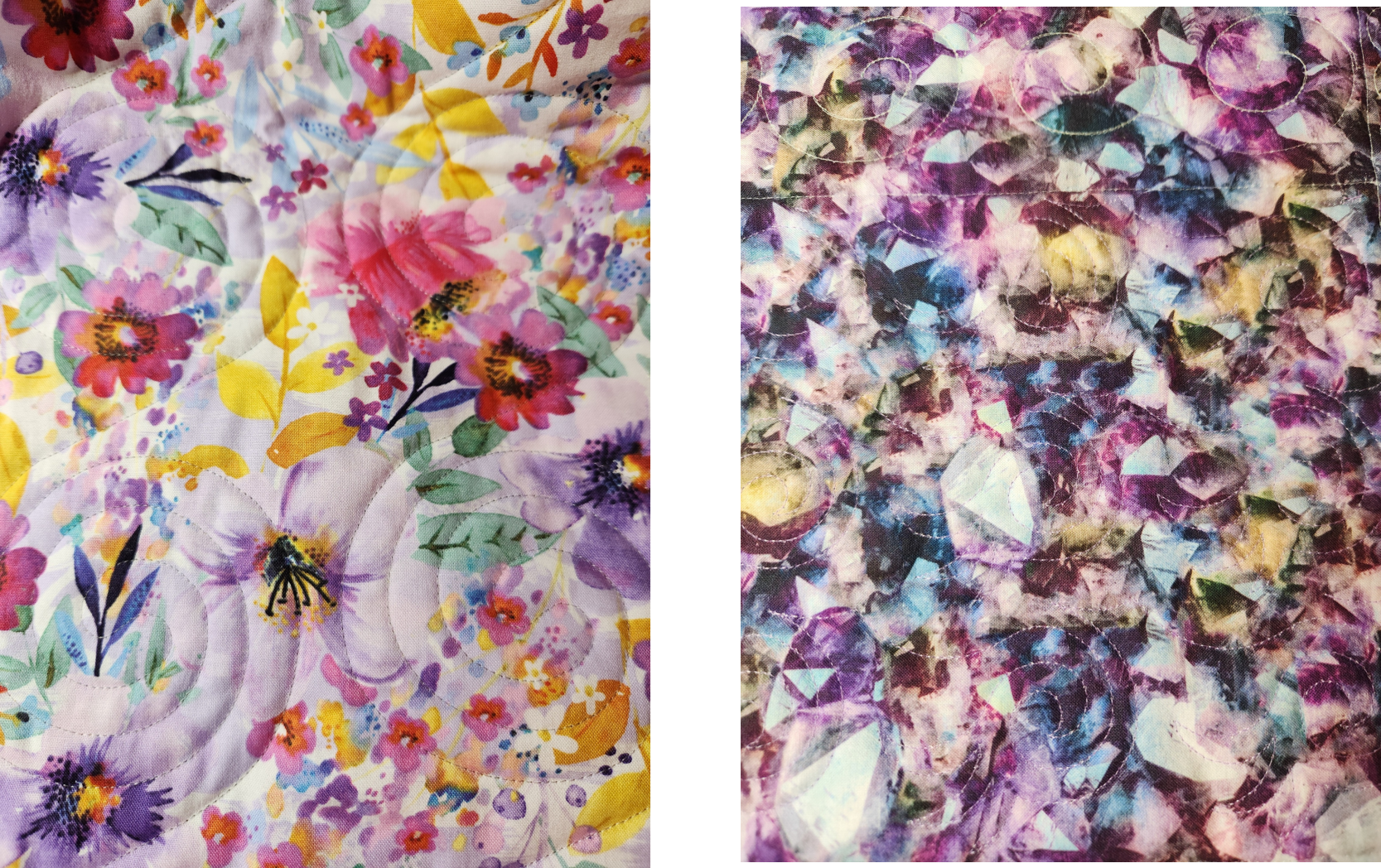
Stitching on the back of the quilt is nearly invisible when using 60 weight thread, allowing the 3D relief of the quilted areas to be defined.
Could this work on a domestic machine? I tried quilting with 60 wt thread in the bobbin of my sewing machine and found the same, nearly invisible results!
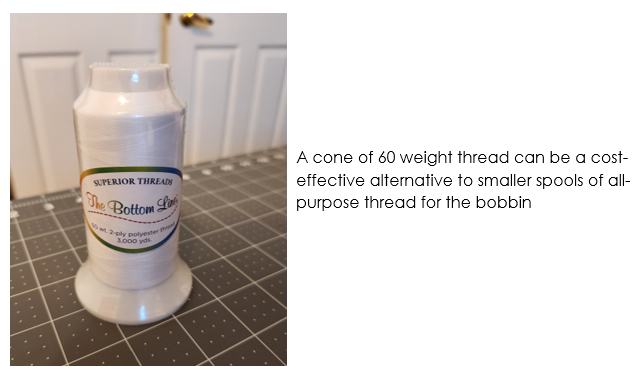
No more having to change the bobbin to match the top thread! In fact, for my longarm quilting projects, I basically keep just two colors on hand: white for light colored backing and gray for darker colors. These blend in so well, there is little need for a rainbow of 60 wt threads. Since thread can be purchased in large cones, the cost of the thread goes down by using just a few colors and having a cone of each instead of a lot of small spools.
I decided to experiment more with 60 wt thread in the bobbin. It aids in accurate piecing too! Since the thread is finer, it helps ensure that the seam is truly ¼ inch and not a little extra.
When pressing a seam to one side, the seam goes flatter and with less distortion at the seamline due to the stitching being less bulky with the finer thread. Sometimes when using 50 wt thread in both the top and bobbin threads, a seam allowance grows a little past ¼ inch due to a little more fabric being pressed to one side due to thread bulk. Enough tiny inaccuracies can result in a more major discrepancy by the time a block or section of a quilt is done!
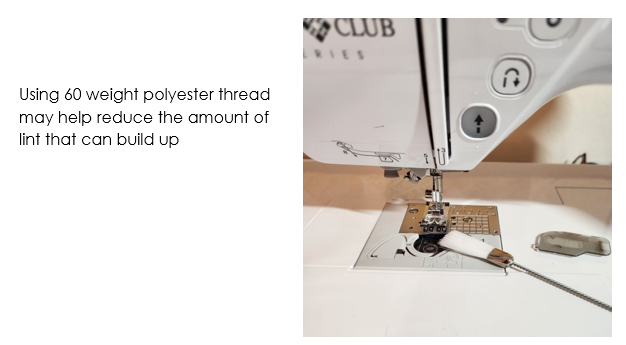
Choosing a polyester 60 wt thread can reduce the amount of lint in the bobbin, another advantage on either a domestic machine or a longarm.
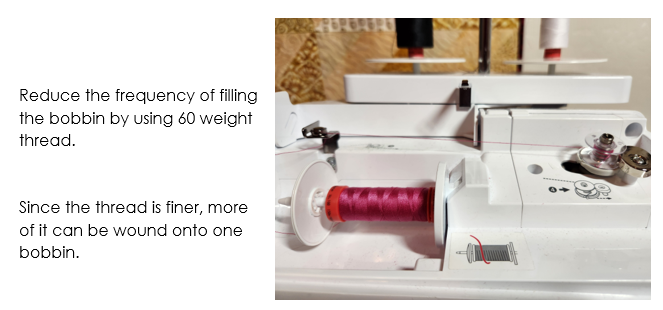
When winding 60 wt thread on the bobbin, much more can fit onto the bobbin due to the finer size off the thread. This reduces how often the bobbin needs to be filled! It’s amazing how much one can sew before a refill is needed when using 60 wt thread in the bobbin.
Some quilters have even noticed that the overall weight of the quilt is reduced by using a lighter thread in the bobbin. Regular 50 wt thread used throughout distributes extra weight all over the quilt. The lighter 60 wt thread gives a small reduction in quilt weight (or maybe it just seems that way!).
So consider your own experiments with thread weight! Why not try it to save time and money and improve accuracy and appearance of your quilts? A higher number thread weight could result in a lower number of issues while quilting, and isn’t that the way to keep quilting fun?